Environmental Missions
Green Mission
by Ed Brown on Nov.27, 2009, under Environmental Missions
Why Creation Care Counts as Missions
( This post originally appeared on the Intervarsity Urbana site at this address: http://www.urbana.org/articles/green-mission. It was written by the Director of Care of Creation — Ed Brown)
Last October, Manila, Philippines was hit by two massive typhoons. According to some reports, 80% of the city experienced flooding, much of it severe. Homes were inundated to the top of the second floor that had never been flooded before. Over 1500 people lost their lives.
On the heels of these storms, an environmental seminar, “Hear the Call to Care for Creation” was held that had been planned almost a year earlier. From homes still damaged by flood waters, more than 70 people spent two days together seeking to understand what God might be saying through what was generally understood to be an environmental disaster.
“This is God’s timing,” said Alice Pineda, director of the sponsoring organization. “We are experiencing the results of sins against the environment, [and] it is time for the Philippine church to address this problem more intentionally and concretely.”
Sins against Creation
Many of the world’s ills – from poverty to political instability – arise from a rapidly intensifying environmental crisis, or to put it in theological terms: sins against God’s creation. Church leaders in the Philippines understood that their recent trials were not due to an ‘act of God’. Typhoons are not pleasant, but they are an indispensable part of God’s creation. However, God has also provided forests to absorb rainfall and wetlands to act as flood barriers when typhoons come.
With most of the forest removed (the Philippines has less than 16% of its original forest remaining), with wetlands replaced by culverts channeled through the middle of Manila, whose population is now more than 10 million, and the storms’ intensity aggravated by climate change, the consequences of accumulated ‘environmental sin’ are obvious.
The Philippines are not alone. Mudslides in Haiti, drought in Kenya, failing wells in India: all signs that environmental abuse increases human suffering. And it is not possible to alleviate that suffering without dealing with that underlying cause. We cannot truly ‘love our neighbor’ without addressing environmental issues.
A God-centered Response
There’s another, just as compelling reason for making the environmental crisis a priority of Christian missions and ministry: As with most human problems, this crisis is rooted in sin. Ecological disaster is a result of human behavior that is selfish, prideful and greedy. A crisis that is caused by sin cannot be solved by science. A problem created by pride will not be corrected with policies.
The environmental crisis is the number one problem in the world for most people outside the church, but it is a crisis that cannot be solved without reference to God. As Paul says in Romans 9:14, ‘How can they call on the One they have not believed in?’ This is one crisis that will not and cannot be resolved without the leadership of the church. It is a sin problem, and there is only one answer to sin.
‘Environmental missions’ is, quite simply, an effort to connect the problem of the environmental crisis with the solution of God’s redemption. Further, it is an opportunity for people in the church who love God’s creation to connect that love with love for God and love for people.
Good Theology, Sound Science, an Integrated Plan
What might a God-centered response to the environmental crisis look like? First, it has to be rooted in good theology. That is, we need a solid biblical understanding of God’s redemptive plan that understands that God’s goal goes beyond human salvation to include all of creation (see Colossians 1:15-20 and Romans 8:18-24). Second, our response has to bring the best environmental and ecological science available to the task. God’s world is complex. We have learned to our regret that simple solutions which do not adequately understand how the world works can make things worse instead of better. And third, our response has to be integrated in every way – across geography, politics, disciplines and organizations. When a problem like deforestation in rural Kenya is driven by poverty in the slums of Nairobi, neither will be solved unless both can be resolved together.
A Call to this generation
If the church is to respond to this environmental crisis, we will need a massive mobilization of people like you: theologians who can articulate the Biblical call to full redemption to the worldwide church. Environmental scientists who can help us understand the problems and who can propose effective workable solutions. And yes, missionaries who can integrate and implement those solutions effectively through local church bodies around the world.
As one of the participants in the Manila seminar said, “My eyes have been opened to what we as God’s children have not done, but praise God we can still do!”
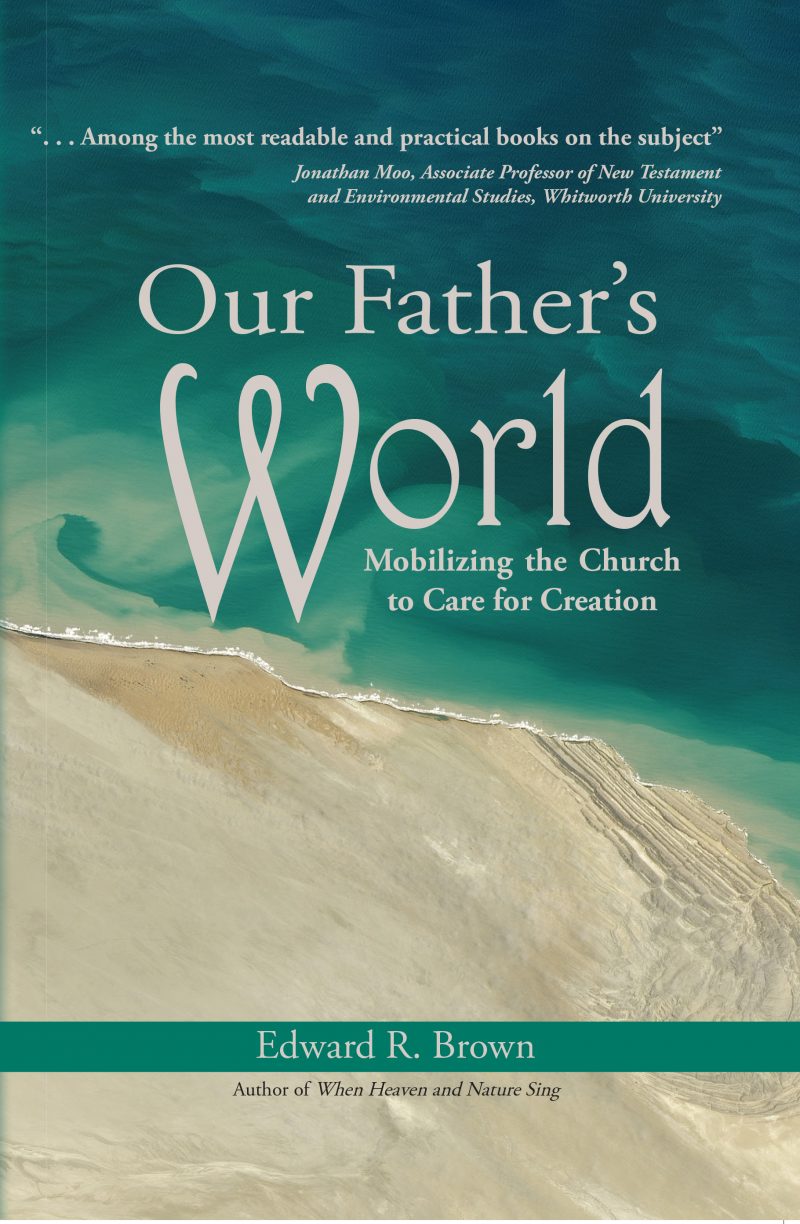
Ed Brown is executive director for Care of Creation Inc. and author of Our Father’s World: Mobilizing the Church to Care for Creation. He will be leading two environmental stewardship seminars at Urbana 09.
Where Goest Our Cities?
by Fredric Gluck on Oct.15, 2009, under Environmental Missions
If you’re thinking about environmental missions either as a part-time or a full time career, it might be worth adding to your thinking, a bit about cities and how they play a part in the future condition of creation.
Just a quick glance at the world tells us that most societies seem to divide where people live into two areas. People either live in a city or they live in a rural area. That’s true (except for the ‘in-between’ place called the ‘burbs which, for the most part, are just young cities.)
What is also obvious if you look around is the impact that cities have on creation — which in turn has an huge impact on the quality of life for the people who live in them.
The basic thinking is that cities can’t be “country”. They are mutually exclusive. You can understand (not necessarily agree with) this thinking based on the fact that most cities are built by altering an area that was once a rural landscape into something that is “unnatural” (un ‘nature’ al). We push aside God’s creation and put something of our own in its place.We then pipe in pieces of creation (water, food and fuel) to replace what we pushed aside and pipe out the stuff we don’t want (trash and sewage).
For those who can pay what it costs to have access to those resources, all is well. For those who can’t pay or who are prevented from benefitting from these resources the city presents a whole host of ‘quality of life’ and justice problems.
There are many people today who are starting to challenge the notion of “it’s either city or rural”. They understand the benefits of people living close to one another but, as believers, can’t reconcile what cities do to the quality of life of those who are poor and can’t reconcile the effect that cities have on creation.
So what to do? There is a movement on now to seriously re-think how our cities are built. The view is that cities should and can be tightly integrated with the environment and the creation that was once pushed aside when the city was built. They believe that creation can be woven back into the fabric of the city and as this is done, the quality of life for all people living in the city will be improved.
Here are some examples of how this is being done.
Community Gardens
There are many cities around the US and the world who are starting to bring agriculture back from the “rural areas” into the cities. These cities are taking under-used or unused land, (there are also churches using their land), reviving it and planting gardens on it. The result of these efforts are that fresh food (at very reasonable prices) is brought back to families who need it. In some cases, the family consumes all it produces and in some cases, the enough is produced to re-sell at a community market. Related to this movement is the movement toward green roofs and the development of urban “open space” such as the recently opened Highline park in New York City.
These community gardens work to bring the neighborhood together as well as providing environmental education and appreciation opportunities to both the young and the old.
Re-Architecture That Imitates God’s Creation
Biomimicry is the practice of adopting what God has already perfected in Nature to buildings in cities. A good example of this is roofs that are shaped liked tropical leaves that collect and funnel water. Roofs like this allow drinking water to be collected and stored and have the benefit of reducing polluted runoff and collecting water for use in community gardens. Clean drinking water is critical to health and quality of life so building houses and buildings to adopt what God already invented makes a lot of sense.
Transportation Alternatives
Providing low cost and and non-polluting (or at least less polluting) transportation is critical to those who have to get from one place to another to work. Many cities are starting to push aside their ‘car-centric’ world and working to become more bicycle friendly. They are also encouraging people and providing training so that those with limited means can learn how to maintain their own bicycles. The reasoning is that getting to a job is as important as creating the job in the first place.
So… what does this all have to do with environmental missions? The point here is that in a lot of cases, environmental missions:
- … does not need to be relegated to rural areas. The environment of our cities provides a whole host of opportunities for missions and for improving the quality of someones life.
- … does not have to be overly complex and resource intensive. There is opportunity to work to repair creation through neighborhood projects such as community gardens, open space parks and restoring urban streams (a process called daylighting).
- … can be an integral part of short-term or long-term missions and is a perfect way to build a “missions heart” in church youth groups or adults looking to help those in their own communities.
Think about it. Environmental missions that restores the land and people’s lives at the same time. Opportunities here in the USA and overseas.
What, then are we waiting for.
Trapped In Place
by Fredric Gluck on Sep.25, 2009, under Environmental Missions
What does it mean to be “trapped in place” and what does it have to do with missions?
If you are living in the Western “2/3″ world (as opposed to the “third world”), you are probably blessed an abundance of choices. Within limits (some imposed by God, some financial, and some imposed by family requirements or tradition) you have the option to make choices about where to live, what college you attend, what kind of work you want to do and even how you want to serve God.
You even have the blessing of choice in the little things — like what you’re going to eat for breakfast tomorrow.
In our western lifestyle, we sometimes have so many choices that we “freeze up” and say ‘ HELP – I don’t know what to do!’ (If you don’t believe me, look at the breakfast cereal isle in your local supermarket some time!) and sometimes, (continue reading…)